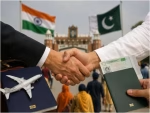

PM Modi at the joint press meet with US president Donald Trump in the White House.
New Delhi:The United States reduced reciprocal tariffs on Indian goods from 50% to 18% following a phone call between Prime Minister Narendra Modi and US President Donald Trump, easing trade tensions that had escalated last year over India’s purchase of Russian crude oil.
President Trump said on Monday that the tariff cut would take effect immediately after India agreed to stop buying Russian oil, a move that had prompted Washington to raise import duties on Indian products from 25% to 50% in August 2025. Since then, India has been facing the highest US tariffs globally.
In a statement posted on social media, Trump said the two countries had reached a trade deal under which US tariffs on Indian goods would be lowered to 18%. He claimed India had committed to halting imports of Russian crude and would purchase larger quantities of energy from the United States and Venezuela.
Trump further said India would reduce its tariffs and non-tariff barriers on American goods to zero and purchase more than $500 billion worth of US energy, agricultural, technology and other products. He linked the move to broader efforts to end the Russia-Ukraine war, presenting the agreement as part of a wider geopolitical push.
Prime Minister Modi welcomed the decision, describing his conversation with Trump as “wonderful”. Thanking the US President on behalf of 1.4 billion Indians, Modi said closer cooperation between the world’s largest democracies would unlock new opportunities for mutual benefit, promote global peace and stability, and take the India-US partnership to new heights.
On Tuesday, Union Commerce and Industry Minister Piyush Goyal said the India-US trade deal was in the final stages of negotiation and that both sides would soon issue a joint statement outlining the details. He said once the agreement is formally signed and technical processes are completed, the government would place the full details in the public domain.
Leaders Welcome Long-Awaited India-US Trade Deal
Political and diplomatic leaders welcomed the agreement, calling it a significant step forward in bilateral ties. US Ambassador to India Sergio Gor said President Trump considers Prime Minister Modi a close friend and described the deal as a major milestone that reflects the “limitless potential” of the India-US relationship.
External Affairs Minister S. Jaishankar said the trade announcements would create jobs, spur growth and promote innovation in both economies. He added that the agreement would strengthen the ‘Make in India’ initiative, encourage trusted technology partnerships and provide a strong economic foundation for the broader strategic partnership between the two countries.
Commerce Minister Goyal said the deal would open new opportunities for India’s economy while protecting sensitive sectors such as agriculture and dairy. He added that it would also expand export opportunities for labour-intensive industries, including textiles, apparel, leather, footwear and other manufacturing sectors.
US Gains More Than India, Opposition Raises Questions
The agreement, however, triggered sharp criticism from the Opposition, which alleged that it disproportionately favours the United States. US Agriculture Secretary Brooke Rollins said the deal would boost exports of American farm products to India’s vast market, helping raise prices and incomes in rural America. She noted that the US had an agricultural trade deficit of $1.3 billion with India in 2024 and said India’s growing population offered a major opportunity for American farmers.
Leader of the Opposition in the Lok Sabha Rahul Gandhi criticised the trade deal, alleging that Prime Minister Modi agreed to it under “extreme pressure”. He claimed the agreement, stalled for months, was signed hastily and accused the Prime Minister of being “compromised”.
Gandhi alleged that the deal had “sold the hard work of Indians” and said the Prime Minister yielded due to pressure on his international image. He also referred to the Epstein files, claiming there was additional pressure linked to material yet to be made public.
Congress MP Shashi Tharoor sought greater clarity, saying the Opposition was not opposing the deal but demanding transparency. He questioned whether announcements made through social media posts by the two leaders were sufficient in a parliamentary democracy and said the government must explain the terms to the public.
Tharoor also raised concerns about protections for Indian farmers, noting Trump’s emphasis on agriculture, and questioned how India could commit to purchases worth $500 billion when its total import bill stands at around $700 billion. He said the Opposition would welcome the deal if it proved beneficial but insisted that details were essential.
The Indian National Congress accused the Modi government of ignoring farmers’ interests. In a post on X, the party said remarks by the US Agriculture Secretary showed that India had agreed to the deal at the cost of its farmers, forcing them to compete with American producers in their own market. Calling it a “direct attack on Indian farmers”, the Congress demanded an explanation from the Prime Minister.
As the government projects the agreement as a strategic breakthrough, Opposition parties continue to question its terms and seek parliamentary scrutiny. With concerns over farmers’ interests, large import commitments and long-term economic impact, critics argue that the true test of the India–US trade deal will lie in transparency and in how equitably its promised gains are shared.
The Author

Discover more from News Network Plus
Subscribe to get the latest posts sent to your email.