
New Delhi: India on Wednesday issued a travel advisory. It urged its citizens currently in Iran to leave the country at the earliest. The advisory cited an evolving security situation amid escalating regional tensions and widespread protests.
In a post on X, the Indian Embassy in Tehran said, “The situation in Iran is evolving. Indian nationals who are currently in Iran should consider leaving. This includes students, pilgrims, business persons, and tourists. They are advised to use available means of transport and commercial flights.”
The Ministry of External Affairs (MEA), in a separate press statement, reiterated its warning. It said Indian nationals are “once again strongly advised to avoid travel to the Islamic Republic of Iran.” This advisory is in effect until further notice.
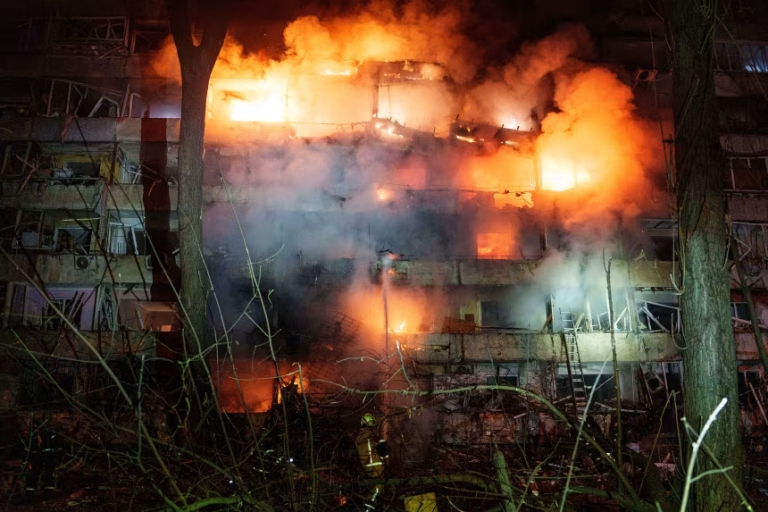
The fresh advisory comes amid heightened instability in the region, including concerns over a possible U.S. military action against Iran and ongoing protests in several parts of the country. According to reports, more than 2,500 people have been killed since the unrest began, prompting Indian authorities to urge their citizens to remain vigilant and avoid areas witnessing demonstrations.
Reiterating its guidance, the Indian Embassy advised all Indian citizens and Persons of Indian Origin (PIOs) to exercise due caution. They should stay away from protest sites. It’s important to remain in contact with the embassy and closely monitor local media for developments. Nationals have also been advised to keep their travel and immigration documents readily accessible at all times. This includes passports and identification papers.
To facilitate assistance, the embassy has activated emergency helplines and shared multiple contact numbers including +989128109115, +989128109109, +989128109102 and +989932179359 along with an official email ID, cons.tehran@mea.gov.in, for consular support.
Indians who have not yet registered with the embassy have been urged to do so on the MEA’s online portal. In case of internet disruptions in Iran, families in India have been requested to complete the registration on their behalf.
The protests in Iran erupted on December 28 over soaring inflation and economic hardship, and have since escalated into one of the most serious challenges to the country’s clerical leadership since the 1979 Islamic Revolution.
Iran’s Supreme Leader Ali Khamenei blamed the unrest on what he described as destructive elements. He said they act in the interests of foreign powers. “Last night in Tehran and in some other places, a group of vandals came. They destroyed a building that was a part of their own country. He accused protesters of placing their hopes in the President of the United States.
The ongoing protests are the most intense agitations Iran has witnessed in a decade. They represent a major test for the country’s theocratic system.
Meanwhile, the United States has threatened strikes against Middle Eastern nations if Iran does not scale back its crackdown. U.S. President Donald Trump on Wednesday urged protesters in Iran to continue their movement, “keep protesting , take over your institutions.Save the names of the killers and abusers. They will pay a big price. I have cancelled all meetings with Iranian Officials until the senseless killing of protesters stops. Help is on its way.
Trump and his administration have repeatedly warned of intervention if Iranian authorities continue to kill peaceful protesters. On January 2, following reports of multiple deaths, Trump wrote on Truth Social that the U.S. was “locked and loaded and ready to go.” On January 11, he further escalated pressure on Tehran by announcing a 25 per cent tariff on countries doing business with Iran.
The Indian government said it continues to closely monitor the situation and remains prepared to extend all necessary assistance to its nationals in Iran.
The Author

Discover more from News Network Plus
Subscribe to get the latest posts sent to your email.